
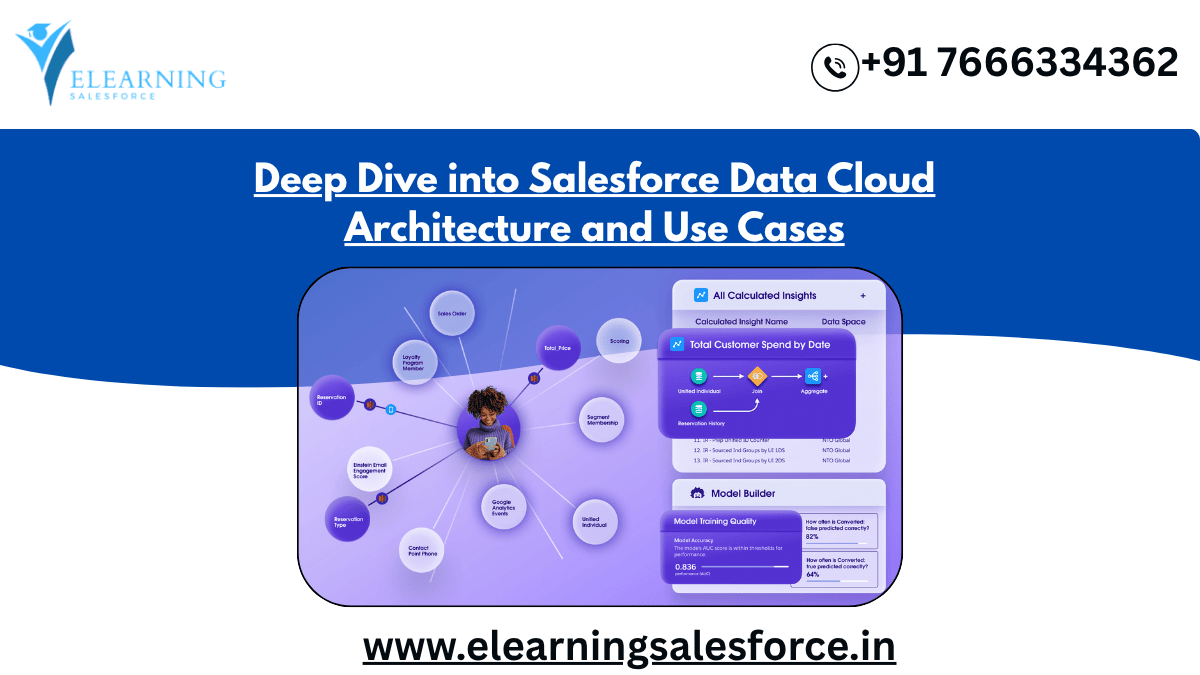
Salesforce has long been the global leader in customer relationship management (CRM), helping businesses connect with their audiences in meaningful ways. Yet, as organizations generate more data than ever before, the need for a unified, real-time understanding of customers has become critical. This is where the Salesforce Data Cloud steps in — a powerful platform that turns fragmented data into actionable intelligence. In today’s digital-first world, where personalization and speed define competitive advantage, Salesforce Data Cloud empowers enterprises to connect, unify, and activate customer data across all touchpoints.
Understanding the Core of Salesforce Data Cloud
At its essence, Salesforce Data Cloud acts as the nervous system of the Salesforce ecosystem. It connects data from multiple sources — CRM systems, e-commerce platforms, marketing automation tools, and even external databases — into a single, unified customer profile. This architecture ensures that every department, from marketing and sales to service and commerce, has access to the same real-time information.
The magic lies in its ability to harmonize structured and unstructured data. Whether it’s purchase history, website activity, IoT signals, or social media engagement, Salesforce Data Cloud integrates everything into what it calls a “Customer 360 profile.” This single source of truth allows organizations to understand not just who their customers are, but what they want, when they want it, and how they prefer to engage.
The Role of Real-Time Data in Modern Business
Traditional CRMs often rely on static data — snapshots that become outdated quickly. Salesforce Data Cloud changes that paradigm by operating in real time. When a customer interacts with your brand — say, clicking on an ad or purchasing through an app — that interaction is instantly captured, processed, and reflected in their customer profile. This immediacy enables personalized recommendations, proactive service, and optimized marketing campaigns that adapt dynamically to customer behavior.
Exploring the Salesforce Data Cloud Architecture
To appreciate how Salesforce Data Cloud delivers such agility, it’s important to understand its architectural foundation. The architecture is designed around five key pillars: data ingestion, data harmonization, identity resolution, activation, and intelligence.
1. Data Ingestion: Bringing Everything Together
Data ingestion is the first step — it allows the platform to collect data from a wide range of internal and external sources. Through native connectors and APIs, organizations can integrate information from Salesforce CRM, Marketing Cloud, Commerce Cloud, and even third-party systems like AWS, Google Cloud, or SAP. This ensures a continuous and seamless flow of information without silos.
2. Data Harmonization: Creating a Common Language
Once data is ingested, it must be standardized. Salesforce Data Cloud uses a robust schema mapping system that aligns data fields across various sources into a consistent model. This “data harmonization” process ensures that an email ID in one system and a user ID in another are recognized as the same entity.
3. Identity Resolution: Building the Golden Record
One of the most powerful features of the Salesforce Data Cloud architecture is identity resolution. The system automatically merges multiple data points related to the same customer — across devices, channels, and sessions — into a unified record. This golden record becomes the foundation for personalized engagement, allowing brands to deliver relevant experiences at scale.
4. Activation: Turning Data into Action
Having unified data is valuable only if it drives action. Salesforce Data Cloud connects seamlessly with Marketing Cloud, Service Cloud, and other Salesforce applications to activate data in real time. For example, when a customer abandons their cart, the system can instantly trigger a personalized email or offer, improving conversion rates and customer satisfaction.
5. Intelligence: Insights That Drive Innovation
Finally, intelligence layers AI and analytics on top of unified data. Using Salesforce Einstein, businesses can predict customer behavior, identify trends, and automate decision-making. This level of intelligence transforms raw information into strategic foresight, helping leaders make informed choices with confidence.
Real-World Use Cases of Salesforce Data Cloud
The versatility of Salesforce Data Cloud is what makes it indispensable across industries. Whether you’re in retail, healthcare, finance, or manufacturing, its real-time, unified architecture delivers measurable results.
Personalized Marketing Campaigns
Imagine a global retailer with millions of customers spread across different regions. With Salesforce Data Cloud, marketing teams can segment audiences dynamically based on behavior, preferences, and purchase history. For instance, a customer browsing sports gear online can immediately receive personalized recommendations and offers tailored to their interests, boosting engagement and sales.
Customer Service Excellence
For service teams, having a 360-degree customer view means faster, smarter support. When a customer contacts support, the agent can instantly access their past purchases, recent interactions, and preferences. This holistic visibility enables proactive service, such as offering solutions before problems escalate — dramatically improving satisfaction and loyalty.
Data-Driven Sales Strategies
Sales teams can use Salesforce Data Cloud to identify high-value prospects, predict buying intent, and prioritize leads. For example, by analyzing engagement data across marketing and commerce channels, sales representatives can focus their efforts on customers most likely to convert, increasing efficiency and revenue.
Healthcare and Patient Engagement
In healthcare, Salesforce Data Cloud plays a transformative role by connecting patient data from clinics, wearable devices, and apps into a single, secure view. This enables personalized care recommendations, timely follow-ups, and improved patient outcomes — all while ensuring compliance with privacy regulations.
Why Salesforce Data Cloud Matters in Today’s AI-Driven World
The rise of artificial intelligence and predictive analytics has elevated data to strategic capital. However, AI is only as powerful as the data it’s trained on. Salesforce Data Cloud ensures that businesses feed their AI systems with high-quality, unified, and real-time data. This synergy between data and AI empowers organizations to deliver hyper-personalized experiences, automate complex workflows, and stay ahead of market trends.
Recent studies indicate that companies leveraging unified customer data platforms see a 45% increase in customer retention and a 30% faster go-to-market time for new campaigns. Salesforce Data Cloud, with its native integration into the broader Salesforce ecosystem, provides an unmatched advantage for businesses aiming to achieve these outcomes.
Building a Future with Connected Data
As digital transformation accelerates, the ability to connect and activate data across ecosystems will determine which organizations thrive. Salesforce Data Cloud represents more than a technology — it’s a strategic approach to customer understanding. By turning data into real-time insight and insight into action, it bridges the gap between data complexity and business simplicity.
For beginners exploring the Salesforce ecosystem, understanding how Salesforce Data Cloud works is a vital step toward mastering modern CRM and data-driven decision-making. Whether you’re an IT professional, marketer, or business leader, investing time in learning its architecture and capabilities will prepare you for a data-intelligent future.
Take the Next Step
If this deep dive has sparked your curiosity, don’t stop here. Explore our advanced Salesforce learning materials, certification guides, and online training programs designed to help you harness the full potential of Salesforce Data Cloud. The journey toward real-time, AI-driven customer engagement begins with understanding your data — and Salesforce Data Cloud is the key to unlocking that potential.
you may be interested in this blog here:-
SAP Analytics Cloud for IoT Data Analysis
CDS in Action: Building Practical Applications
How do I create an optimization profile in Salesforce Field Service?
Master SAP Business Process Integration In Complex IT Landscapes
